

Crypto Approval Scam Explained: How One Click Gives Scammers Full Wallet Access
The crypto approval scam is one of the most misunderstood yet dangerous threats in the crypto space. It is closely related to wallet drainer scams and often acts as the mechanism behind them. Many victims do not realize they have been scammed because they were never “hacked” — they unknowingly gave permission.
This article explains how approval scams work, why they are so effective, and why understanding approvals is critical for anyone using crypto wallets, DeFi platforms, or NFTs.
What Is a Crypto Approval Scam?
A crypto approval scam occurs when a user is tricked into approving a malicious smart contract. That approval allows the contract to:
- Spend specific tokens on the user’s behalf
- Transfer assets without further confirmation
- In some cases, drain multiple tokens automatically
Once approved, the scammer does not need access to private keys. The blockchain treats the transfer as authorized.
This is why approval scams are so dangerous — the damage is technically “valid” on-chain.
How Approval Scams Are Used in Wallet Drainers
Wallet drainers almost always rely on approval scams. The drainer itself is not magic; it simply exploits permissions.
The typical flow looks like this:
- A user visits a fake website
- The site asks the user to connect their wallet
- The site requests a token approval instead of a transaction
- The user approves without fully understanding the request
- Assets are drained instantly or shortly after
The approval is the door, and the drainer is what walks through it.
Why Approval Requests Look So Confusing
Approval messages are intentionally technical. They often include:
- Long contract addresses
- Phrases like “Set spending cap”
- Unlimited token amounts
- Generic wallet pop-ups
Most users assume approvals are harmless because:
- They don’t immediately move funds
- Wallets don’t clearly explain the risk
- The request looks similar to normal DeFi activity
Scammers rely on this confusion.
Unlimited Approval: The Biggest Red Flag
One of the most dangerous aspects of approval scams is unlimited spending permission.
This allows a malicious contract to:
- Drain all current tokens
- Drain future deposits
- Empty stablecoins first
- Transfer NFTs silently
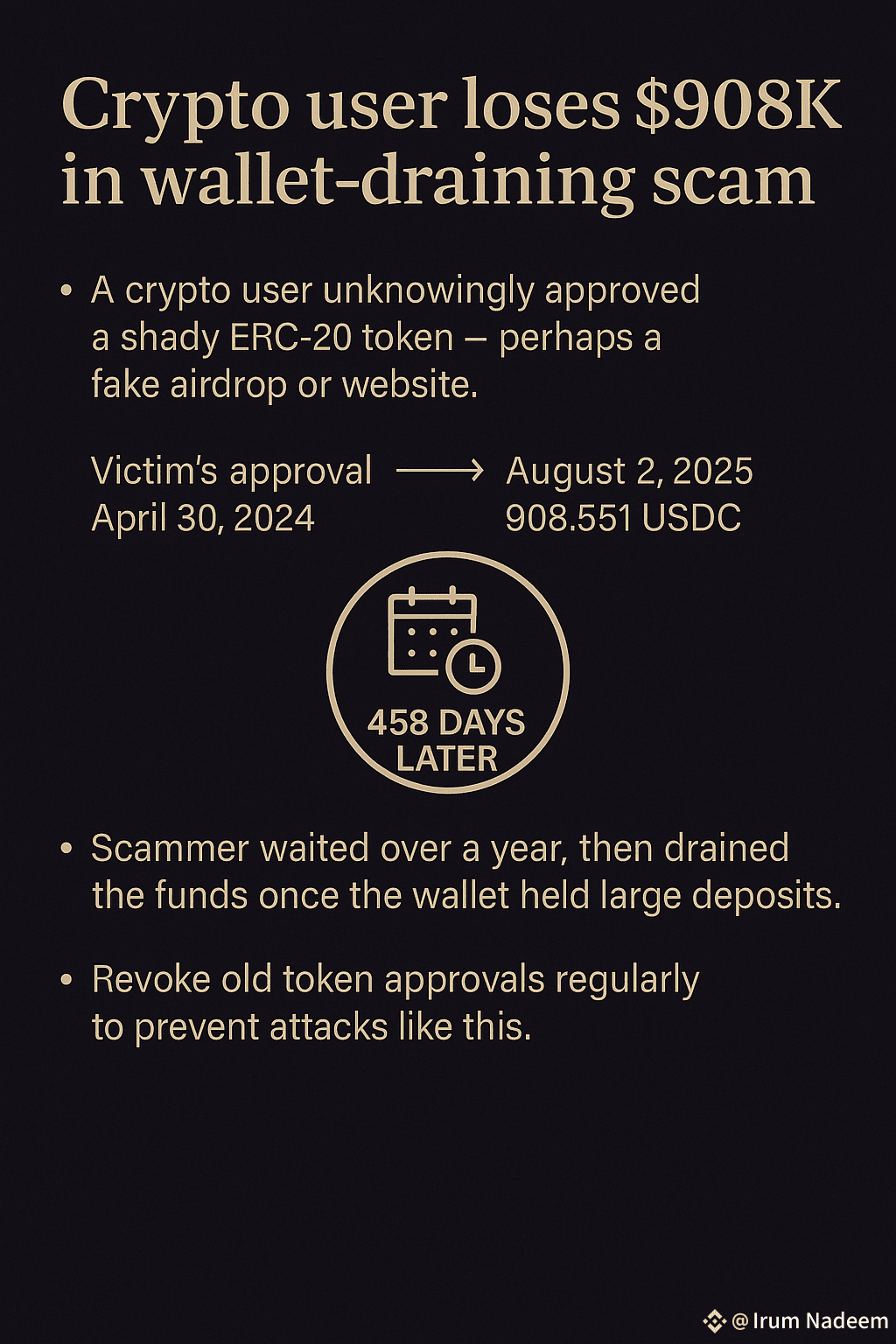
Once unlimited approval is granted, the wallet remains vulnerable until access is revoked.
Common Situations Where Approval Scams Occur
Approval scams commonly appear during:
- Fake NFT mints
- Fake airdrop claims
- Fake staking platforms
- Fake DeFi swaps
- Impersonated project websites
- Links shared through private messages
If a site asks for approval before clearly explaining why, it is a major warning sign.
Why Victims Often Don’t Notice Immediately
Unlike traditional scams, approval scams may not drain the wallet instantly. In some cases:
- Assets are drained hours later
- Only specific tokens are targeted
- Funds disappear after new deposits
This delay causes confusion and makes victims question themselves instead of the approval they granted earlier.
The Long-Term Risk of Approval Scams
Even after a wallet is drained, malicious approvals can remain active. This means:
- New funds can be stolen
- New tokens can be targeted
- The wallet stays compromised
Many users mistakenly believe the threat is over once funds are gone, when in reality the approval still exists.
Who Is Most at Risk
Approval scams most commonly affect:
- DeFi users
- NFT traders
- Airdrop hunters
- New crypto investors
- Users interacting with unknown links
Anyone who regularly clicks “Approve” without reviewing details is exposed.
How to Reduce the Risk of Approval Scams
While no method is perfect, risk can be reduced by:
- Avoiding unknown or rushed links
- Being cautious with NFT mints and airdrops
- Reading approval pop-ups carefully
- Using separate wallets for experiments
- Regularly reviewing wallet permissions
In crypto, permissions matter as much as private keys.
Final Thoughts
Approval scams are not technical hacks — they are permission-based deception. They exploit trust, speed, and confusion rather than security flaws.
Understanding approvals is essential for protecting crypto assets. One careless click can silently hand over full control of a wallet, often without immediate warning.
For many victims, approval scams are the moment everything goes wrong — not because of hacking, but because of trust misplaced in a single transaction